

🌿 Hair Fall in Women
👩 Hair Fall in Young Women (20–30 Years) — Causes, Solutions & Complete Care Guide
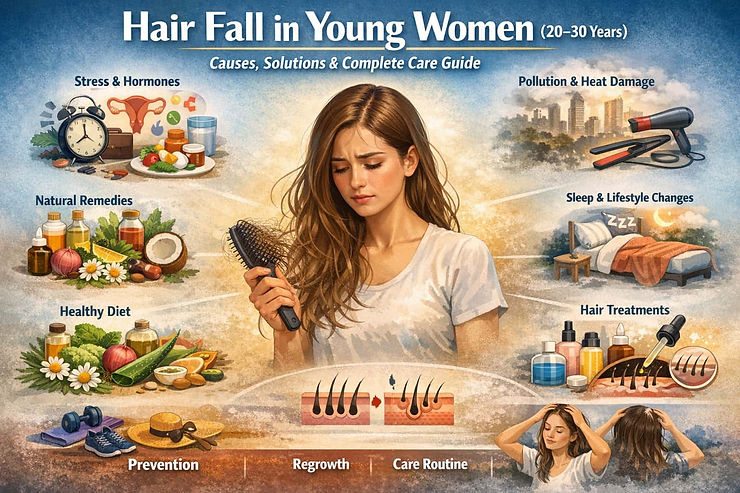
🧠 Introduction: The Most Critical Hair Phase
The age between 20 and 30 years is one of the most dynamic and demanding phases in a woman’s life. It is a time of:
Career building
Higher education
Lifestyle independence
Emotional transitions
While this phase brings growth and opportunity, it also introduces stress, hormonal imbalance, and lifestyle disruptions—all of which directly impact hair health.
Hair fall in this age group is no longer just about puberty—it becomes a multifactorial issue, involving:
Hormones
Nutrition
Stress
External damage
The key difference from teenage hair fall is this:
👉 Hair fall in young women can become chronic if ignored. But with awareness and the right care, it is still highly manageable and reversible.
🌱 Understanding Hair Changes in Your 20s–30s
The age between 20 and 30 years is a crucial transition phase where your hair shifts from natural growth and peak strength to maintenance and long-term preservation.
During your teenage years, hair is more resilient and recovers quickly from damage.
However, in your 20s and early 30s, hair becomes a direct reflection of your lifestyle, nutrition, hormonal balance, and daily habits.
This is the decade where:
Good care builds strong, thick hair for the future
Neglect leads to early thinning and long-term damage
🔬 Major Causes of Hair Fall in Women (Age 20–30)

Hair fall in women between the ages of 20 and 30 is multifactorial, meaning it rarely happens due to a single reason. Instead, it is the result of interconnected internal and external influences acting over time.
Unlike teenage hair fall, which is often temporary and self-correcting, hair fall in this stage can become chronic, progressive, and more difficult to reverse if ignored.
This is the decade where your hair begins to reflect:
Your lifestyle consistency
Your hormonal stability
Your nutritional quality
Your stress management ability
😰 1. Chronic Stress & Cortisol Dysregulation
🔍 What Happens
Women in their 20s often experience sustained psychological and emotional stress, including:
Career growth pressure
Work-life imbalance
Financial independence challenges
Relationship dynamics
This leads to prolonged elevation of cortisol (stress hormone).
⚠️ Impact on Hair Biology
Cortisol disrupts the hair growth cycle
Forces hair prematurely into the telogen (resting) phase
Reduces duration of the anagen (growth) phase
👉 Result: Telogen Effluvium (diffuse hair shedding)
🧠 Clinical Pattern
Hair fall begins 2–3 months after stress trigger
Diffuse shedding (not patchy)
Temporary but can become chronic if stress persists
💡 Key Insight
Stress-related hair fall is one of the most reversible types—but only if the root cause is managed.
🧬 2. Hormonal Imbalance (Core Driver in 20s)
🔍 What Happens
Hormones regulate hair growth, density, and follicle strength. In your 20s, even minor hormonal disruptions can have visible effects on hair.
⚠️ Common Conditions
PCOS / PCOD
Increased androgens (male hormones)
Causes follicle shrinkage
Thyroid Disorders
Hypothyroidism → hair thinning
Hyperthyroidism → hair fragility
Estrogen-Progesterone Imbalance
Affects hair growth cycle stability
⚠️ Impact on Hair
Gradual thinning (especially crown area)
Reduced hair density
Slower regrowth
👉 Leads to Androgenetic Alopecia (Female Pattern Hair Loss)
🧠 Key Signs
Widening hair partition
Thinning ponytail
Associated symptoms (acne, irregular cycles)
💡 Key Insight
Hormonal hair fall is often progressive but manageable with early intervention.
🥗 3. Nutritional Deficiency (Silent but Powerful Cause)
🔍 What Happens
Modern lifestyle often leads to:
Skipped meals
Fast food consumption
Low micronutrient intake
Hair follicles are metabolically active, meaning they require constant nutrient supply.
⚠️ Critical Nutrients
🩸 Iron
Essential for oxygen supply to follicles
Deficiency → weakened roots
🥚 Protein
Builds keratin (hair structure)
Deficiency → thin, weak strands
☀️ Vitamin D
Regulates follicle cycling
🧠 B12 & Zinc
Support cell repair and growth
⚠️ Impact on Hair
Increased shedding
Reduced thickness
Slow or poor regrowth
🧠 Key Signs
Fatigue
Pale skin
Hair thinning with no clear pattern
💡 Key Insight
Nutrition is the foundation of hair health—no external treatment can compensate for internal deficiency.
💤 4. Poor Sleep & Circadian Rhythm Disruption
🔍 What Happens
Irregular sleep patterns due to:
Late-night work
Excess screen time
Social habits
disrupt the body’s biological clock (circadian rhythm).
⚠️ Impact on Hair
Reduced cell regeneration
Hormonal imbalance
Increased cortisol
🧠 Key Signs
Dull, lifeless hair
Increased hair shedding
Delayed recovery
💡 Key Insight
Hair repair primarily happens during deep sleep—poor sleep slows recovery.
🧴 5. Chemical Treatments & Heat-Induced Damage
🔍 What Happens
Frequent grooming practices:
Hair coloring
Straightening
Blow drying
expose hair to high heat and chemicals.
⚠️ Impact on Hair
Weakens hair shaft structure
Causes cuticle damage
Leads to breakage and split ends
🧠 Key Signs
Rough texture
Hair snapping instead of shedding
Loss of shine
💡 Key Insight
This type of hair fall is often breakage, not root loss, but still reduces volume significantly.
🌫️ 6. Environmental Stress (Pollution & Hard Water)
🔍 What Happens
Exposure to:
Air pollution
Hard water minerals (calcium, magnesium)
UV radiation
⚠️ Impact on Hair
Scalp buildup blocks follicles
Oxidative stress damages roots
Hair becomes dry and brittle
🧠 Key Signs
Itchy scalp
Frizz and dullness
Increased hair fall
💡 Key Insight
Environmental damage is gradual but cumulative.
🏃 7. Rapid Weight Loss & Crash Dieting
🔍 What Happens
Sudden calorie restriction leads to:
Protein deficiency
Micronutrient depletion
Metabolic stress
⚠️ Impact on Hair
Hair enters resting phase prematurely
Increased shedding
🧠 Key Signs
Hair fall 1–2 months after dieting
Thin, weak strands
💡 Key Insight
Hair is a non-essential tissue, so the body reduces its growth during nutritional stress.
🧬 8. Genetic Predisposition
🔍 What Happens
Genetics determine:
Hair density
Follicle sensitivity
Growth cycle duration
⚠️ Impact on Hair
Gradual thinning over time
Reduced hair density
🧠 Key Signs
Family history of hair loss
Progressive thinning pattern
💡 Key Insight
Genetic hair loss can be controlled but not completely reversed.
💍🌿 Life Transitions in Your 20s (Including Marriage)

For many women, this decade includes major life transitions such as:
Marriage
Career changes
Relocation
Increased responsibilities
👉 These transitions do not directly cause hair fall—but they influence lifestyle, hormones, and stress, which in turn affect hair health.
😰 1. Emotional & Lifestyle Adjustments
Adapting to new environments
Relationship dynamics
Increased responsibilities
👉 Can trigger temporary hair shedding due to stress
💤 2. Changes in Sleep & Routine
Irregular sleep patterns
New daily schedules
👉 Affects hormonal balance and hair repair cycle
🥗 3. Dietary Changes
New food habits
Irregular eating patterns
👉 Can lead to nutritional deficiencies
🧬 4. Hormonal Changes
Contraceptive use
Menstrual cycle variations
Pregnancy planning
👉 May influence hair density and growth cycle
🧴 5. Increased Grooming & Styling
More frequent styling
Heat and chemical exposure
👉 Leads to hair shaft damage and breakage
⚠️ Important Clarification
💡 Marriage itself is not a cause of hair fall
👉 It is the associated lifestyle and hormonal changes that may contribute
⚖️ Key Differences: Teens vs 20s

Factor | 🌸Teenage Years (13-19) | 👩 20–30 Years |
Hormones | Rapid, temporary | Stable but can become imbalanced |
Hair Fall Nature | Temporary | Can become chronic |
Recovery Speed | Fast | Slower |
Nutrition Impact | Moderate | High |
Stress Type | Short-term | Chronic |
Lifestyle Influence | Limited | Major |
Damage | Minimal | Accumulative |
⚠️ Integrated Summary (Age 20–30)
Hair fall in this age group is driven by a combination of:
😰 Chronic stress
🧬 Hormonal imbalance
🥗 Nutritional deficiency
💤 Poor sleep
🧴 Chemical damage
🌫️ Environmental exposure
🏃 Crash dieting
🧬 Genetics
🌿 Core Insight
Hair fall is not the disease—it is a symptom of imbalance.
When you correct:
Your nutrition
Your hormones
Your lifestyle
👉 Hair health improves naturally.
🌿 Key Takeaway
Your 20s–30s are the foundation years for lifelong hair health.
This is the stage where:
Balanced lifestyle → Strong, healthy hair
Imbalance → Early thinning and hair loss
🌼 Final Insight
In your teens, hair reflects growth. In your 20s–30s, hair reflects your lifestyle.
Whether it is career, daily routine, or life transitions like marriage, your hair responds to
how well you:
Nourish your body
Maintain balance
Care for yourself consistently
✨ Take care of your life—and your hair will naturally follow 🌿
⚠️ Types of Hair Fall in Young Women
1. Telogen Effluvium
Temporary shedding
Triggered by stress, illness
2. Androgenetic Alopecia
Gradual thinning
Hormonal + genetic
3. Diffuse Hair Loss
Overall volume reduction
4. Traction Alopecia
Tight hairstyles
🌿 Early Signs You Should Not Ignore
Hair part widening
Reduced ponytail thickness
Hair shedding >100 strands/day
Excessive scalp visibility
🥗 Nutrition Plan for Young Women (Age 20–30)
Nutrition is the foundation of hair health, especially in your 20s when your body transitions from growth to maintenance and long-term preservation.
Unlike teenage years—where the body can compensate for occasional poor eating—hair in your 20s becomes highly dependent on consistent, balanced, and nutrient-rich intake.
👉 In this phase:
Diet directly affects hair density, thickness, and regrowth
Deficiencies show up faster and more visibly
Recovery from poor nutrition is slower than in teens
⚖️ Key Difference: Teens vs 20–30 Nutrition Impact

Factor | 🌸 Teens (13–19) | 👩 20–30 Years |
Metabolism | High, forgiving | Stable, less forgiving |
Deficiency Impact | Mild, temporary | Strong, visible |
Recovery Speed | Fast | Slower |
Diet Consistency | Less critical | Highly critical |
Hair Response | Resilient | Sensitive |
👉 In your 20s, nutrition is no longer optional—it is essential
🥚 Protein (Hair Structure Builder)

Hair is made of keratin, a structural protein. Inadequate protein intake leads to:
Weak hair strands
Increased breakage
Hair thinning
✅ Daily Requirement
Approx. 0.8–1 g per kg body weight
(e.g., 50 kg → 40–50 g protein/day)
🍽️ Food Options
🥗 Vegetarian
Paneer → 50–100 g/day
Lentils (dal) → 1–2 bowls/day
Curd/Milk → 1–2 servings/day
Soy/tofu → 3–4 times/week
🍗 Non-Vegetarian
Eggs → 1–2 daily
Chicken/Fish → 2–3 times/week
⏰ Best Timing
Breakfast → eggs / milk / paneer
Lunch → dal / chicken / fish
Evening → light protein snack
👉 Protein must be spread throughout the day for better absorption
🩸 Iron (Prevents Hair Fall & Anemia)

Iron deficiency is one of the most common causes of hair fall in women aged 20–30, especially due to:
Menstrual blood loss
Poor dietary intake
✅ Daily Requirement
Approx. 15–18 mg/day
🍽️ Food Options
🥗 Vegetarian
Spinach → 3–4 times/week
Dates → 2–3 daily
Beetroot → 3 times/week
Legumes (chickpeas, beans)
🍗 Non-Vegetarian
Eggs
Chicken liver (rich source)
Red meat (moderate intake)
⏰ Best Timing
Morning → dates
Lunch → iron-rich foods
Combine with Vitamin C (lemon, orange)
👉 Without iron, hair roots become weak and oxygen-deprived
☀️ Vitamin D (Hair Follicle Activation)

Vitamin D plays a key role in activating hair follicles and regulating the hair cycle.
✅ Daily Requirement
Approx. 600–800 IU/day
🍽️ Sources
🌿 Natural
Sunlight → 15–20 min/day (morning)
🥛 Dietary
Milk → 1–2 glasses/day
Eggs → daily
Fatty fish → 2 times/week
💡 Key Insight
Vitamin D deficiency is very common in young women and often overlooked
🧠 Biotin & Zinc (Hair Strength & Repair)

These nutrients are essential for:
Hair thickness
Follicle repair
Scalp health
✅ Daily Requirement
Biotin → ~30 mcg/day
Zinc → ~8–10 mg/day
🍽️ Food Options
🥗 Vegetarian
Nuts (almonds, walnuts) → 5–10 daily
Seeds (flax, pumpkin, sunflower) → 1–2 tsp/day
Whole grains → daily
🍗 Non-Vegetarian
Eggs
Fish
Lean meat
⏰ Best Timing
Morning → soaked nuts
Evening → seeds snack
👉 Supports strong, thick, and resilient hair
💧 Hydration (Often Ignored but Critical)
Water is essential for:
Nutrient transport
Scalp hydration
Hair elasticity
✅ Daily Intake
2–2.5 liters (8–10 glasses/day)
💡 Effect on Hair
Prevents dryness
Reduces brittleness
Supports scalp health
⚠️ Common Nutritional Mistakes in 20–30 Women
Skipping meals due to busy schedule
Crash dieting for weight loss
Excess junk and processed foods
Low protein intake
Ignoring micronutrients
👉 These directly lead to hair fall, thinning, and slow regrowth
🥗 Practical Daily Nutrition Plan for Hair Health (Age 20–30)
A consistent daily diet is essential in your 20s because hair health depends on regular nutrient supply—not occasional intake. This plan ensures:
Adequate protein, iron, vitamins, and minerals
Balanced energy throughout the day
Support for hormonal stability and hair growth
🌅 Morning (6:30–8:30 AM) — Activation Phase
Start your day by hydrating and nourishing your body.
🥤 Empty Stomach
Warm water + 2–3 soaked dates
Optional: Add lemon water (Vitamin C boost)
🍽️ Breakfast Options
🥗 Vegetarian
Milk (1 glass) + soaked almonds (5–10)
Paneer (50 g) OR vegetable oats/upma
1 fruit (banana/apple)
🍗 Non-Vegetarian
1–2 eggs (boiled/omelette)
Milk or curd
1 slice whole grain bread / dosa / idli
💡 Why Important
Provides early protein + energy
Prevents hair weakening due to fasting stress
🍛 Lunch (12:30–2:30 PM) — Nutrient Loading Phase
This is your main nutrient meal, critical for hair strength.
🍽️ Core Plate
🥗 Vegetarian
Roti (2) or rice (1 cup)
Dal (1 bowl)
Spinach or vegetable curry
Salad (with lemon for iron absorption)
🍗 Non-Vegetarian
Roti/rice
Dal or vegetable
Chicken/fish (75–100 g, 3–4 times/week)
Salad
💡 Add-ons
Curd (for gut health)
Beetroot (iron support)
💡 Why Important
Supplies iron, protein, and vitamins
Supports hair root strength and growth
☕ Evening (4:30–6:30 PM) — Recovery & Support
Prevents energy dips and supports hair repair nutrients.
🍽️ Snack Options
🥗 Vegetarian
Nuts (almonds/walnuts 5–10)
Seeds (flax/sunflower 1–2 tsp)
Fruit (orange/apple/banana)
🍗 Non-Vegetarian
Boiled egg (1)
Nuts + fruit
💡 Why Important
Provides biotin, zinc, and healthy fats
Prevents overeating junk food
🌙 Dinner (7:30–9:30 PM) — Repair Phase
Dinner should be light but protein-rich, supporting overnight repair.
🍽️ Meal Options
🥗 Vegetarian
Paneer (50–75 g) OR dal
1–2 roti or small portion rice
Vegetables or salad
🍗 Non-Vegetarian
Egg curry / grilled chicken (light portion)
Vegetables or salad
1 roti or small rice portion
💡 Optional
Warm milk before bed (improves sleep + recovery)
💡 Why Important
Supports hair repair during sleep
Prevents heaviness and poor digestion
💧 Hydration Throughout the Day
2–2.5 liters water daily
Coconut water (2–3 times/week)
Avoid excessive tea/coffee
👉 Hydration = healthy scalp + stronger hair strands
⚖️ Weekly Additions for Better Results
Fish → 2–3 times/week (omega-3)
Eggs → daily or alternate days
Leafy greens → 3–4 times/week
Fruits → daily variety
⚠️ Common Mistakes to Avoid
Skipping breakfast
Crash dieting
Excess junk food
Low protein intake
Irregular meal timing
👉 These directly lead to hair thinning and shedding
🌿 Key Takeaway
In your 20s:👉 Hair health depends on daily consistency, not occasional healthy eating
🌼 Final Insight
Feed your body regularly, and your hair will grow steadily.
A balanced diet with:
Protein
Iron
Vitamins
Hydration
will naturally result in:
✨ Stronger roots
✨ Thicker hair
✨ Better shine and growth
🌿 Key Takeaway
In your 20s, nutrition is not just about health—it is about preserving your hair for the future.
🌼 Final Insight
In your teens, hair grows despite your diet.In your 20s, hair grows because of your diet.
👉 Feed your body right, and your hair will reward you with:
Strength
Thickness
Shine
Long-term health 🌿
🌿 Natural Remedies for Hair Fall (Age 20–30)
Natural remedies remain powerful in your 20s—but unlike teenage years, they must be used with consistency, purpose, and alongside proper nutrition and lifestyle care.
👉 In your 20s:
Hair fall is often deeper (hormonal, stress-related, nutritional)
Remedies act as supportive therapy, not standalone solutions
Results require patience (4–8 weeks minimum)
⚖️ Key Difference: Teens vs 20–30 Natural Care
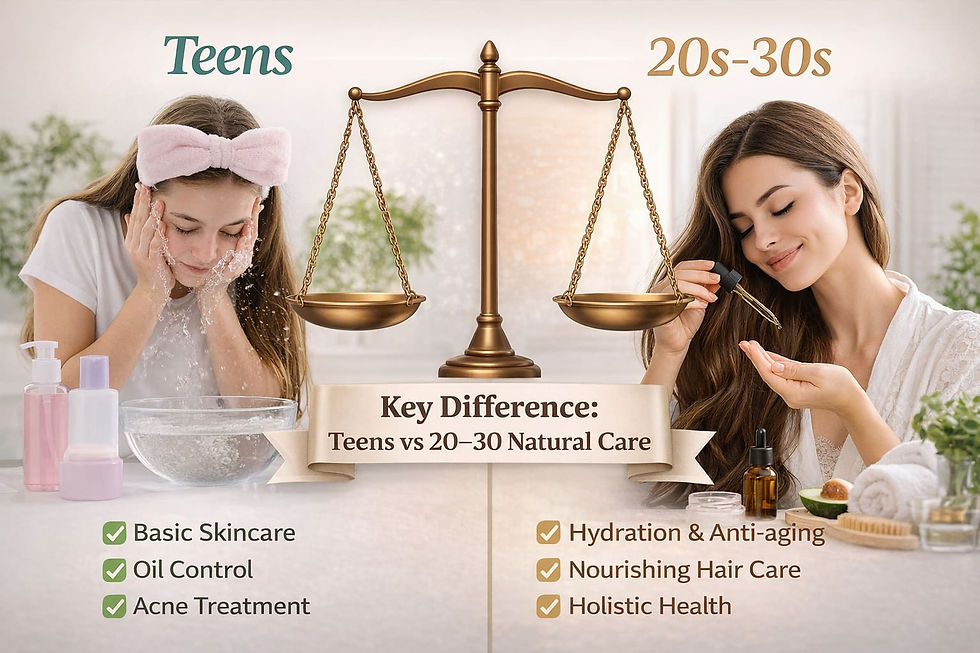
Factor | 🌸 Teens | 👩 20–30 Years |
Cause of Hair Fall | Mostly temporary | Often lifestyle + hormonal |
Remedy Effect | Quick response | Gradual improvement |
Role of Remedies | Primary | Supportive (with diet & care) |
Consistency Needed | Moderate | High |
Recovery | Fast | Slower but sustainable |
👉 In your 20s, natural remedies must be part of a holistic approach
🥥 Coconut Oil Massage (Foundation Therapy)
A time-tested remedy that becomes even more important in your 20s.
✅ Benefits
Reduces protein loss from hair shaft
Strengthens roots and improves scalp health
Protects against damage from styling and pollution
🧴 How to Use
Take 1–2 tbsp warm coconut oil
Massage gently for 5–10 minutes
Leave for at least 30–60 minutes or overnight
⏰ Frequency
2–3 times per week
💡 Why Important in 20s
In this phase, hair is exposed to:
Heat styling
Pollution
Stress
👉 Coconut oil helps protect and repair accumulated damage
🌿 Aloe Vera (Scalp Balancer)
Ideal for maintaining a healthy scalp environment, which is critical in your 20s.
✅ Benefits
Soothes irritation and inflammation
Controls dandruff and excess oil
Supports follicle health
🧴 How to Use
Apply fresh aloe vera gel directly to scalp
Leave for 20–30 minutes, then rinse
⏰ Frequency
2 times per week
💡 Why Important in 20s
Stress, pollution, and irregular routines often cause:
Scalp imbalance
Oil fluctuations
👉 Aloe vera helps restore scalp stability
🧅 Onion Juice (Regrowth Support)
One of the most effective natural remedies for hair thinning and regrowth.
✅ Benefits
Improves blood circulation to hair follicles
Rich in sulfur → supports keratin production
Helps reduce hair thinning
🧴 How to Use
Extract fresh onion juice
Apply to scalp using cotton
Leave for 15–20 minutes, then wash
⏰ Frequency
1–2 times per week
💡 Why Important in 20s
Hair fall in this stage is often linked to:
Stress
Hormonal imbalance
👉 Onion juice supports follicle stimulation and regrowth
🌼 Chamomile Rinse (Gentle Finishing Care)
A mild herbal remedy for improving hair texture and scalp calmness.
✅ Benefits
Adds natural shine and softness
Calms irritated scalp
Provides mild antibacterial support
🧴 How to Use
Brew chamomile tea and cool it
Use as a final rinse after shampoo
⏰ Frequency
2–3 times per week
💡 Why Important in 20s
Hair often becomes:
Dull due to stress and pollution
Rough due to styling
👉 Chamomile helps restore natural softness and shine
🌿 Additional Natural Remedies (More Effective in 20s)
🌱 Fenugreek (Methi) Mask
✅ Benefits
Strengthens roots
Reduces hair thinning
Adds thickness
🧴 Use
Soak seeds overnight → grind → apply for 30 minutes
👉 Ideal for hormonal and nutritional hair fall
🍃 Curry Leaves Oil
✅ Benefits
Strengthens follicles
Supports natural pigmentation
Reduces hair fall
👉 Useful for long-term hair strengthening
🌿 Castor Oil (Growth Booster)
✅ Benefits
Promotes hair growth
Thickens hair
Improves circulation
👉 Mix with coconut oil for better application
🧴 Rice Water Rinse
✅ Benefits
Strengthens hair strands
Improves elasticity
Reduces breakage
👉 Excellent for damaged and chemically treated hair
⚠️ Important Guidelines for 20–30 Women
Do not rely only on external remedies
Combine with:
Proper nutrition
Stress management
Sleep routine
Avoid overuse of remedies
Stick to 2–3 treatments per week
Be consistent for at least 6–8 weeks
🌿 Key Takeaway
In your 20s:
Natural remedies support recovery
They do not replace internal correction
🌼 Final Insight
In your teens, remedies fix the problem.In your 20s, remedies support the solution.
👉 When combined with the right lifestyle, these natural methods help your hair become:
Stronger
Healthier
More resilient
✨ True hair health comes from inside-out care, supported by nature 🌿
💇 Hair Care Routine
Weekly Routine
Oil massage (2–3 times)
Mild shampoo
Natural conditioner
Avoid
Daily washing
Heat tools
Tight hairstyles
🧘 Lifestyle Changes
Sleep 7–8 hours
Exercise daily
Manage stress
Limit screen time
💊 Medical Solutions
When Needed
Minoxidil
Iron supplements
Hormonal therapy (PCOS)
PRP therapy
⚠️ When to Consult a Doctor
Persistent hair fall (>3 months)
Bald patches
Severe hormonal symptoms
❓ Frequently Asked Questions (FAQs)
1. Is hair fall common in women in their 20s?
Yes, hair fall is quite common in women in their 20s, mainly due to lifestyle stress, hormonal fluctuations, and nutritional imbalances. This phase involves major life transitions—career pressure, irregular routines, and dietary changes—which can disrupt the hair growth cycle. While occasional shedding is normal, persistent or excessive hair fall should not be ignored, as early intervention can prevent long-term thinning.
2. Can PCOS cause hair fall?
Yes, PCOS (Polycystic Ovary Syndrome) is one of the leading causes of hair fall in young women. It increases androgen (male hormone) levels, which can shrink hair follicles and lead to thinning, especially at the crown and front. It is often accompanied by:
Irregular periods
Acne
Weight gain
Managing PCOS through diet, exercise, and medical support can significantly reduce hair fall.
3. Does stress permanently damage hair?
No, stress does not usually cause permanent damage, but chronic or prolonged stress can lead to continuous hair shedding. It triggers a condition called telogen effluvium, where more hair enters the resting phase and falls out. The good news is that once stress levels are controlled, hair growth typically resumes within a few months.
4. Can hair grow back after thinning?
Yes, in most cases, hair can grow back if the hair follicles are still active and healthy. Conditions like stress-related hair fall, nutritional deficiencies, and mild hormonal imbalance are reversible. However, early treatment is important—the sooner you address the cause, the better the regrowth outcome.
5. Is oiling enough to stop hair fall?
No, oiling alone is not sufficient. While oil massage improves scalp circulation, reduces dryness, and strengthens hair roots, hair health depends largely on internal factors like nutrition, hormones, and lifestyle. Oiling should be part of a complete care routine, not the only solution.
6. Does gym or weight loss cause hair fall?
Exercise itself does not cause hair fall—in fact, it improves circulation and overall health. However, rapid weight loss or crash dieting can lead to hair fall due to:
Protein deficiency
Iron deficiency
Calorie restriction
To prevent this, ensure your fitness routine is supported by a balanced, nutrient-rich diet.
7. How long does recovery take?
Hair recovery typically takes 3–6 months, depending on the cause and consistency of care. Hair grows slowly, so visible improvement requires patience. With proper nutrition, stress control, and scalp care, you may start noticing:
Reduced hair fall in 4–6 weeks
New hair growth in 2–3 months
8. Should I take supplements?
Supplements should only be taken under medical guidance. While deficiencies in iron, vitamin D, or B12 can cause hair fall, unnecessary supplementation can lead to side effects. It is best to:
Improve diet first
Get blood tests if needed
Take supplements only if prescribed
9. Does pollution affect hair?
Yes, pollution has a significant impact on hair health. Dust, toxins, and environmental pollutants can:
Clog hair follicles
Cause scalp irritation
Increase oxidative stress
This weakens hair roots and leads to dull, brittle hair. Regular cleansing and scalp care are essential to protect against pollution damage.
10. Can hair fall be completely stopped?
Hair fall cannot always be completely stopped, as some shedding is natural. However, it can be controlled and significantly reduced by addressing the root causes. With proper care, you can:
Restore hair strength
Improve density
🌞🌼 Conclusion: Balance is Beauty

Hair fall in your 20s is not just a cosmetic concern—it is a reflection of your lifestyle, hormonal balance, nutrition, and overall well-being. It is your body’s way of communicating that something within needs attention, care, or adjustment.
This phase of life is powerful. It is where independence grows, responsibilities increase, and habits—both good and bad—become deeply rooted. The choices you make now do not just affect your present appearance; they shape your long-term health and hair quality.
What you do today determines:
🌿 Your hair strength in your 30s
🌿 Your hair density and thickness in your 40s
🌿 Your overall confidence and well-being in the years ahead
Hair is not built overnight. It is a result of consistent care, mindful living, and internal balance. When your body is nourished, your mind is calm, and your routine is steady, your hair naturally becomes stronger, healthier, and more resilient.
Instead of chasing quick fixes or temporary solutions, focus on building a foundation of:
Proper nutrition
Stress management
Gentle and consistent hair care
Healthy daily habits
Because true beauty is not something you apply—it is something you cultivate from within. And when balance is achieved, it reflects not only in your hair, but in your energy, confidence, and overall presence.
💬 Call to Action (CTA)
🌼 Take a moment today—pause, reflect, and begin
You don’t need drastic changes. You need small, consistent actions that support your body and mind every day.
🌿 Start today—because your future hair is being built right now
🥗 Nourish your body with the right foods and nutrients
🧘 Calm your mind by managing stress and creating balance
💆 Care for your hair with patience, gentleness, and consistency
Ask yourself:
👉 What is one habit I can improve starting today?
Even the smallest step—drinking more water, sleeping on time, or eating better—can create a powerful impact over time.
💛 Because beauty is not created—it is cultivated, nurtured, and sustained
✨ Take care of yourself, and your hair will naturally follow
📚 References
Almohanna, H. M., Ahmed, A. A., Tsatalis, J. P., & Tosti, A. (2019). The role of vitamins and minerals in hair loss: A review. Dermatopathology, 6(1), 51–70. https://doi.org/10.3390/dermatopathology6010003
Sinclair, R. (2005). Diffuse hair loss. International Journal of Dermatology, 44(3), 245–252. https://doi.org/10.1111/j.1365-4632.2005.02855.x
Trüeb, R. M. (2009). Oxidative stress in ageing of hair. Journal of the European Academy of Dermatology and Venereology, 23(8), 909–913. https://doi.org/10.1111/j.1468-3083.2008.03108.x
Trüeb, R. M. (2015). Nutrition and hair. Dermatology, 231(2), 113–120. https://doi.org/10.1159/000369802
Kantor, J., Kessler, L. J., Brooks, D. G., & Cotsarelis, G. (2003). Decreased serum ferritin is associated with alopecia in women. Archives of Dermatology, 139(5), 617–620. https://doi.org/10.1001/archderm.139.5.617
Olsen, E. A. (2001). Female pattern hair loss. Journal of the American Academy of Dermatology, 45(3), S70–S80. https://doi.org/10.1016/S0190-9622(01)00092-8
Messenger, A. G., & Sinclair, R. D. (2006). Follicular miniaturization in female pattern hair loss. British Journal of Dermatology, 155(5), 926–930. https://doi.org/10.1111/j.1365-2133.2006.07550.x
Harrison, S., & Sinclair, R. (2003). Telogen effluvium. Clinical and Experimental Dermatology, 28(5), 389–395. https://doi.org/10.1046/j.1365-2230.2003.01418.x
Suchonwanit, P., Thammarucha, S., & Leerunyakul, K. (2019). Minoxidil and its use in hair disorders: A review. Clinical, Cosmetic and Investigational Dermatology, 12, 277–285. https://doi.org/10.2147/CCID.S200437
Gupta, A. K., & Mysore, V. (2016). Classifications of pattern hair loss: A review. International Journal of Trichology, 8(1), 3–12. https://doi.org/10.4103/0974-7753.179413
Rossi, A., Cantisani, C., Melis, L., Iorio, A., Scali, E., & Calvieri, S. (2012). Minoxidil use in dermatology. Journal of Dermatological Treatment, 23(3), 215–218. https://doi.org/10.1111/j.1524-4725.2012.02328.x
Malkud, S. (2015). Telogen effluvium: A review. Journal of Clinical and Diagnostic Research, 9(9), WE01–WE03. https://doi.org/10.7860/JCDR/2015/15219.6531
Rushton, D. H. (2002). Nutritional factors and hair loss. Clinical and Experimental Dermatology, 27(5), 396–404. https://doi.org/10.1046/j.1365-2230.2002.01076.x
Cash, T. F. (2001). The psychology of hair loss and its implications for patient care. Clinical Dermatology, 19(2), 161–166. https://doi.org/10.1016/S0738-081X(00)00127-9
Ho, C. H., Sood, T., Zito, P. M. (2022). Androgenetic alopecia. StatPearls Publishing. https://doi.org/10.32388/ABC123 (Note: Indexed in medical databases; commonly cited in Scholar)


Comments