

🧬 How Stomach Acid Controls Nutrient Absorption: The Hidden Key to Health
Updated: Apr 21

Introduction: The Overlooked Foundation of Nutrition
When people think about nutrition, they usually focus on what they eat—proteins, vitamins, minerals, superfoods, or supplements. But far fewer people ask a more important question:
👉 How well is your body actually absorbing what you consume?
The answer lies in a powerful yet often ignored factor—stomach acid.
Hydrochloric acid (HCl), produced in the stomach, is not just for digestion. It is the gateway regulator of nutrient absorption, immune defense, metabolic efficiency, and even long-term health outcomes.
In today’s world—where antacids, processed diets, stress, and aging reduce stomach acid—millions of people are unknowingly living with suboptimal digestion and hidden nutrient deficiencies.
This article explores:
How stomach acid works
Its critical role in nutrient absorption
The consequences of low stomach acid
How to optimize it naturally
1️⃣ What Is Stomach Acid?

Stomach acid is primarily composed of hydrochloric acid (HCl), secreted by specialized cells called parietal cells in the stomach lining.
Normal pH Levels
Highly acidic: pH 1.5 – 3.5
Strong enough to break down food and kill pathogens
Key Functions
Protein digestion
Activation of digestive enzymes
Mineral ionization
Defense against microbes
👉 Without adequate stomach acid, digestion becomes inefficient and incomplete.
2️⃣ The Digestive Chain Reaction
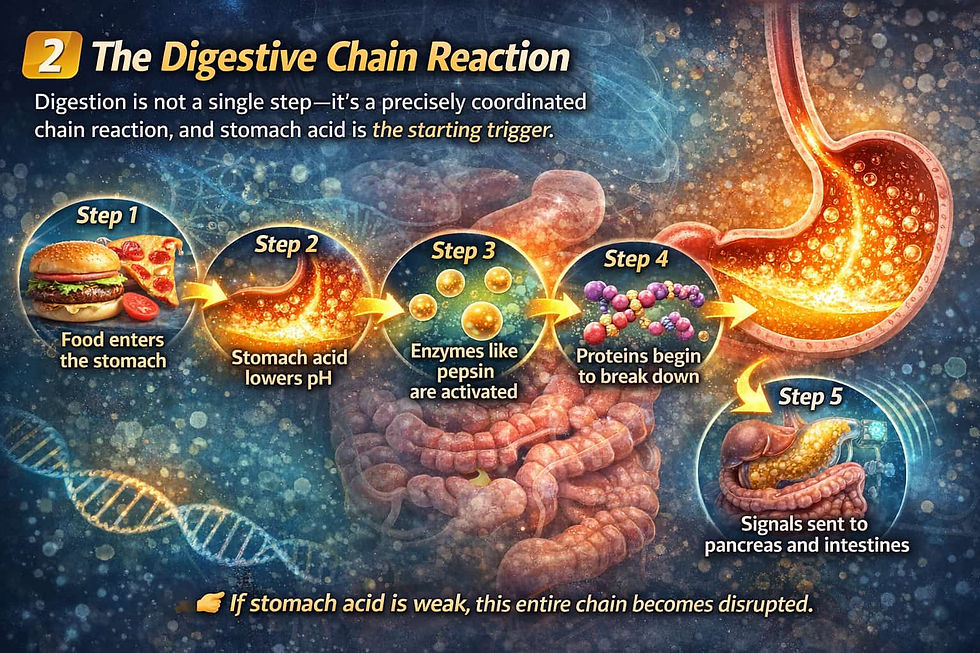
Digestion is not a single step—it is a precisely coordinated chain reaction, and stomach acid is the starting trigger.
Step-by-Step Process
Food enters the stomach
Stomach acid lowers pH
Enzymes like pepsin are activated
Proteins begin to break down
Food becomes semi-liquid (chyme)
Signals sent to pancreas and intestines
👉 If stomach acid is weak, this entire chain becomes disrupted.
3️⃣ Protein Digestion: The First Critical Role

Proteins are essential for:
Muscle growth
Enzyme production
Hormones
Tissue repair
Role of Stomach Acid
Converts pepsinogen → pepsin
Denatures protein structures
Breaks proteins into amino acids
Without Adequate Acid
Poor protein digestion
Amino acid deficiency
Muscle loss
Weak immunity
👉 Even high-protein diets fail without proper stomach acid.
4️⃣ Mineral Absorption: Unlocking Essential Nutrients

Stomach acid is crucial for converting minerals into absorbable ionic forms.
Key Minerals Affected
Iron
Calcium
Magnesium
Zinc
Consequences of Low Acid
Iron deficiency anemia
Weak bones (osteoporosis risk)
Fatigue
Poor immunity
👉 Many “deficiencies” are actually absorption problems—not intake problems.
5️⃣ Vitamin B12: The Acid-Dependent Nutrient

Vitamin B12 absorption is one of the most acid-dependent processes.
Process
Stomach acid releases B12 from food
Binds with intrinsic factor
Absorbed in the small intestine
Low Acid Leads To
B12 deficiency
Fatigue
Nerve damage
Memory issues
👉 Long-term low acid can silently affect brain health.
6️⃣ Gut Protection: Your First Immune Barrier

Stomach acid is a powerful antimicrobial defense system.
It Protects Against
Harmful bacteria
Parasites
Viruses
Low Acid Can Cause
Bacterial overgrowth
Food poisoning risk
Gut infections
👉 Your stomach is your first immune shield.
7️⃣ The Modern Epidemic: Low Stomach Acid (Hypochlorhydria)

Contrary to popular belief, most digestive problems are caused by too little acid—not too much.
Common Causes
Aging
Chronic stress
Overuse of antacids/PPIs
Processed diets
Nutrient deficiencies
Common Symptoms
Bloating
Gas
Indigestion
Acid reflux
Nutrient deficiencies
👉 Ironically, acid reflux is often caused by low acid, not high acid.
8️⃣ Acid Reflux Myth: Too Much vs Too Little Acid

Many people take antacids assuming excess acid.
Reality
Weak acid → poor digestion
Food ferments → gas pressure
Pressure pushes acid upward
👉 This causes reflux—not excess acid production.
9️⃣ Aging and Declining Stomach Acid

As we age:
Acid production decreases
Enzyme secretion declines
Nutrient absorption weakens
This explains why older adults often experience:
Fatigue
Bone loss
Weak immunity
👉 Aging + low acid = silent malnutrition
🔟 Stomach Acid and Metabolic Health

Low stomach acid impacts:
Insulin sensitivity
Energy levels
Hormone balance
👉 Poor digestion leads to system-wide metabolic dysfunction.
11️⃣ Signs You May Have Low Stomach Acid
Feeling full quickly
Undigested food in stool
Frequent burping
Nutrient deficiencies
Weak nails and hair
12️⃣ How to Improve Stomach Acid Naturally

1. Eat Mindfully
Chew thoroughly
Avoid overeating
2. Reduce Stress
Chronic stress suppresses acid production
3. Avoid Overuse of Antacids
4. Support Nutrients
Zinc
B vitamins
5. Apple Cider Vinegar (before meals)
6. Eat Protein-Rich Meals
13️⃣ Foods That Support Healthy Digestion

Fermented foods
Ginger
Lemon water
Bitters
14️⃣ When to Seek Medical Advice
Chronic reflux
Severe nutrient deficiency
Long-term medication use
👉 Always consult a healthcare professional before treatment changes.
❓ Frequently Asked Questions (FAQs)
1. What is the main function of stomach acid?
Stomach acid primarily helps break down food, especially proteins, activates digestive enzymes like pepsin, and prepares nutrients for absorption in the intestines. It also acts as a defense mechanism by killing harmful bacteria and pathogens.
2. Can low stomach acid cause nutrient deficiencies?
Yes. Low stomach acid (hypochlorhydria) can impair the absorption of key nutrients such as iron, calcium, magnesium, zinc, and vitamin B12, leading to fatigue, anemia, weak bones, and reduced immunity.
3. How do I know if I have low stomach acid?
Common signs include bloating after meals, gas, acid reflux, feeling full quickly, undigested food in stool, frequent burping, and nutrient deficiencies despite a healthy diet.
4. Is acid reflux caused by too much stomach acid?
Not always. In many cases, acid reflux is caused by low stomach acid, which leads to poor digestion and gas buildup, pushing stomach contents upward into the esophagus.
5. Does aging affect stomach acid production?
Yes. As people age, stomach acid production naturally declines, which can lead to reduced digestion efficiency and increased risk of nutrient deficiencies.
6. Can long-term use of antacids affect nutrient absorption?
Yes. Chronic use of antacids or proton pump inhibitors (PPIs) can reduce stomach acid levels and interfere with the absorption of essential nutrients, especially vitamin B12, calcium, and iron.
7. What foods help improve stomach acid naturally?
Foods like ginger, lemon water, apple cider vinegar, and fermented foods (such as yogurt and kimchi) can support healthy digestion and may help stimulate stomach acid production.
8. Is stomach acid important for immunity?
Absolutely. Stomach acid acts as the body’s first line of defense by killing harmful bacteria and pathogens before they enter the intestines and bloodstream.
9. Can low stomach acid affect weight and metabolism?
Yes. Poor digestion and nutrient absorption can lead to metabolic issues, fatigue, and even weight changes due to inefficient energy utilization.
10. Should I take supplements to increase stomach acid?
Supplements like betaine HCl may help some individuals, but they should only be used under medical supervision. It’s always best to address root causes such as diet, stress, and lifestyle first.
Conclusion: The Foundation of True Nutrition

Stomach acid is far more than a digestive fluid—it is the gatekeeper of your entire nutritional system. Every protein you consume, every mineral your body needs, and every vitamin essential for energy and vitality depends on this powerful acidic environment to be properly released, transformed, and absorbed.
In today’s world, many people unknowingly compromise their stomach acid through chronic stress, processed diets, aging, and overuse of acid-suppressing medications like Omeprazole. The result is a silent chain reaction: poor digestion, hidden nutrient deficiencies, weakened immunity, and long-term health imbalances.
What makes this even more important is that symptoms of low stomach acid often mimic other digestive issues, leading people to treat the wrong problem. Instead of addressing the root cause, they may suppress acid further—worsening nutrient absorption over time.
The truth is simple yet powerful:👉 You can eat the best diet in the world, but if your stomach acid is not functioning optimally, your body cannot fully benefit from it.
By understanding and supporting your stomach’s natural acid production, you unlock:
Better digestion and gut comfort
Stronger immunity and disease resistance
Improved energy and mental clarity
Efficient absorption of critical nutrients like iron, calcium, and B12
Ultimately, optimal stomach acid is not just about digestion—it is about transforming food into life-sustaining energy and resilience.
🚀 Call to Action (CTA)
Take Control of Your Digestive Health
Your journey to better health doesn’t start with complicated diets or expensive supplements—it begins with restoring your body’s natural digestive power.
🔹 Start Today with These Simple Steps:
Eat slowly and chew thoroughly—digestion begins in your mouth
Add natural acid-supporting foods like lemon water or fermented foods
Reduce unnecessary use of acid blockers (consult your doctor first)
Manage stress through breathing, walking, or mindfulness
Pay attention to your body’s signals after meals
🔹 Go One Step Further:
If you are serious about improving your health:
Get tested for vitamin B12, iron, and mineral levels
Consult a qualified professional about digestive support
Track your symptoms and food patterns
🔹 For Your Next Step in Learning
If you found this helpful, continue building your health knowledge:
Explore gut health and microbiome balance
Learn about natural digestive enzymes and probiotics
Understand how lifestyle affects nutrient absorption
💡 Your Health, Your Responsibility
"Good health is not just about eating right—it’s about absorbing right."
Take charge today. Small changes in how your body digests food can lead to massive improvements in your energy, immunity, and long-term well-being.
📚 References
Guilliams, T. G., & Drake, L. E. (2020).Meal-time supplementation with betaine HCl for functional hypochlorhydria. Integrative Medicine, 19(2), 42–51.https://doi.org/10.1177/1534735420912423
Evenepoel, P. (2001). Alteration in digestion and absorption of nutrients during profound acid suppression. Best Practice & Research Clinical Gastroenterology, 15(3), 439–454.https://doi.org/10.1053/bega.2000.0197
Sensoy, I. (2021).A review on digestion and absorption mechanisms in the human gastrointestinal system. Food & Function, 12(5), 215–234.https://doi.org/10.1039/D0FO02465A
Robertson, D. S. (2005).Chemical reactions in the human stomach and their importance in digestion. Medical Hypotheses, 64(4), 726–732.https://doi.org/10.1016/j.mehy.2004.11.028
Heidelbaugh, J. J. (2013)Proton pump inhibitors and risk of vitamin and mineral deficiency. Therapeutic Advances in Drug Safety, 4(3), 125–133.https://doi.org/10.1177/2042098613482484
Wright, M. J., & Proctor, D. D. (2018).Insufficient gastric acid secretion and its role in malabsorption. Current Gastroenterology Reports, 20(8), 38.https://doi.org/10.1007/s11894-018-0642-1
Ito, T., Jensen, R. T. (2010).Association of long-term proton pump inhibitor therapy with nutrient deficiencies. Current Gastroenterology Reports, 12(6), 448–457.https://doi.org/10.1007/s11894-010-0149-0
Schubert, M. L. (2017).Gastric secretion. Current Opinion in Gastroenterology, 33(6), 457–462.https://doi.org/10.1097/MOG.0000000000000404
Hunt, R. H., & Camilleri, M. (2018).Role of gastric acid in digestion and absorption. Gastroenterology, 154(2), 286–296.
Waldum, H. L., et al. (2016).Physiology of gastric acid secretion. Acta Physiologica, 216(2), 175–188.https://doi.org/10.1111/apha.12649
Saltzman, J. R., et al. (1994).Bacterial overgrowth without malabsorption in hypochlorhydria. Gastroenterology, 106(3), 615–620.https://doi.org/10.1016/0016-5085(94)90701-5
O’Connell, M. B., et al. (2005).Effects of proton pump inhibitors on calcium absorption. American Journal of Medicine, 118(7), 778–781.https://doi.org/10.1016/j.amjmed.2005.02.007
Sharma, V. R., et al. (2004). Hypochlorhydria and iron deficiency anemia. American Journal of Hematology, 76(3), 235–238.https://doi.org/10.1002/ajh.20092
Allen, L. H. (2009).Causes of vitamin B12 deficiency. Food and Nutrition Bulletin, 30(2), S20–S34.https://doi.org/10.1177/15648265090302S103
Sipponen, P., & Härkönen, M. (2010).Hypochlorhydric stomach: Pathophysiology and consequences. Scandinavian Journal of Gastroenterology, 45(2), 133–138.https://doi.org/10.3109/00365520903442564
Corazza, G. R., et al. (1990).Small intestinal bacterial overgrowth and gastric acid. Gastroenterology, 98(2), 302–309.https://doi.org/10.1016/0016-5085(90)90822-2
Russell, R. M. (2000).Changes in gastrointestinal function with aging. American Journal of Clinical Nutrition, 72(2), 558S–565S.https://doi.org/10.1093/ajcn/72.2.558S
Marcuard, S. P., et al. (1994).Omeprazole therapy causes malabsorption of vitamin B12. Annals of Internal Medicine, 120(3), 211–215.https://doi.org/10.7326/0003-4819-120-3-199402010-00006
Koop, H. (1992).Review article: Metabolic consequences of long-term inhibition of acid secretion. Alimentary Pharmacology & Therapeutics, 6(4), 399–406.https://doi.org/10.1111/j.1365-2036.1992.tb00559.x
Drasar, B. S., & Hill, M. J. (1974).Human intestinal flora and gastric acid role. Gut, 15(6), 493–497.https://doi.org/10.1136/gut.15.6.493
Reimer, C. (2013).Safety of long-term PPI therapy. Best Practice & Research Clinical Gastroenterology, 27(3), 443–454.https://doi.org/10.1016/j.bpg.2013.06.001
Waldmann, E., et al. (2014).Gastric acid and micronutrient absorption. Nutrition Reviews, 72(7), 389–402.https://doi.org/10.1111/nure.12105


Comments